On the road to Sion: BASE with AI Swiss and Groupe Mutuel (in French)
· Sion, Groupe Mutuel
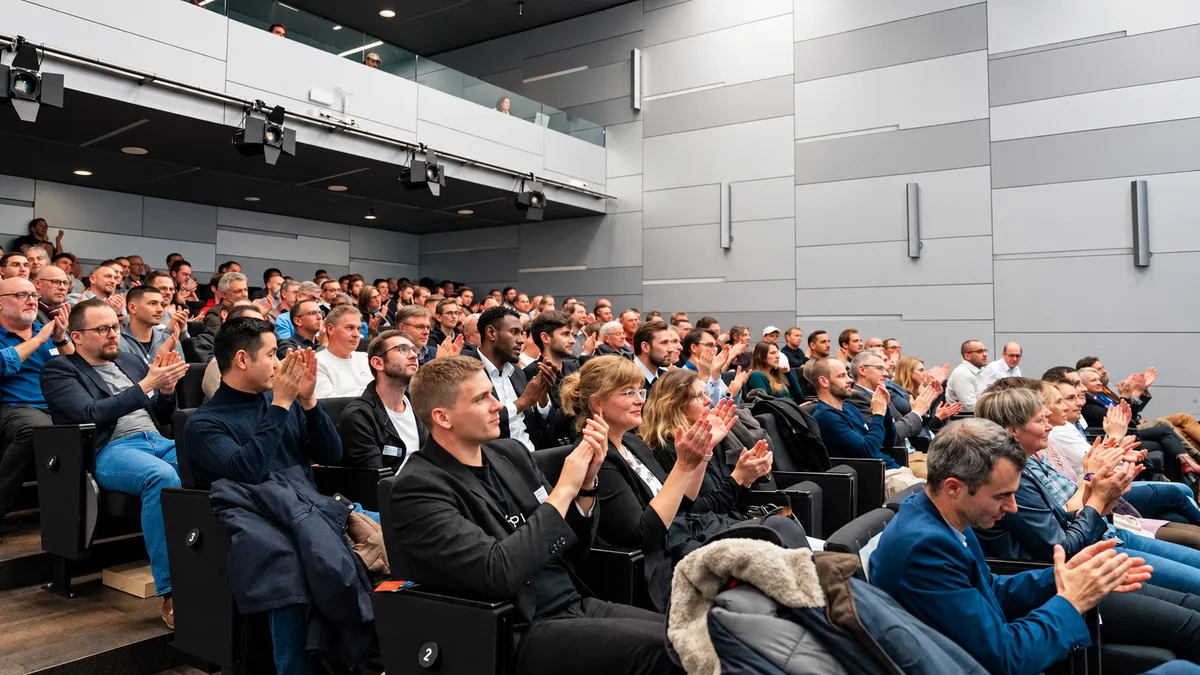
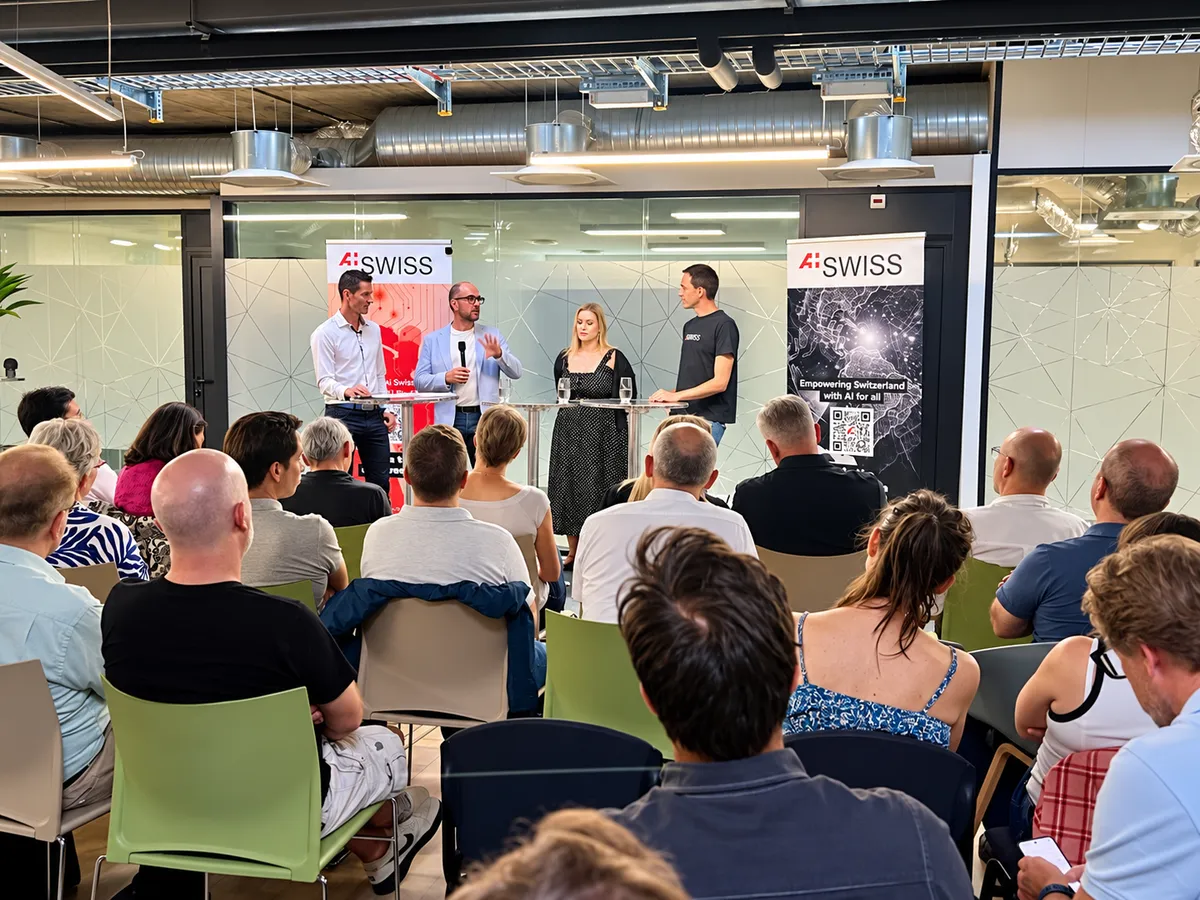
Groupe Mutuel, a member of AI Swiss, hosts us at its offices in Sion for an evening demonstrating BASE.

Swiss non-profit association
AI Swiss trains people, publishes free resources and brings together everyone who wants to stay in control of artificial intelligence: individuals, schools, businesses and institutions.

















AI Swiss resources are free and open to all.
No programming needed: learn to say what you want to achieve, then to check the answer.
Shape AI around your work, in files that you keep.
Brain2Brain talks, workshops and gatherings open to the public.
Register on each event’s page.
A free resource from AI Swiss
BASE lets you shape AI around your work, in files that you keep and can read back. The video is in French, with French subtitles.
Events
Brain2Brain conferences, workshops and meetings open to the public.
· Sion, Groupe Mutuel
Groupe Mutuel, a member of AI Swiss, hosts us at its offices in Sion for an evening demonstrating BASE.
The association
AI Swiss was founded shortly after ChatGPT arrived in late 2022, to bring artificial intelligence closer to the general public. It is based in Neuchâtel.
The association brings together researchers, teachers, developers, parents, entrepreneurs and policymakers. Through talks, workshops and free resources, it teaches human-AI co-thinking. Co-thinking means working in dialogue with AI: stating your intention clearly, giving context, then questioning and checking every answer before using it.
Figures quoted in the video predate those on this page.
[A conversation opens in an AI tool: “Hey chat, I need to code a web app, make me the base code to start my project”. The tool replies with code.]
[On-screen text: “Solves the wrong problem”, then “Verification debt”.]
[AI Swiss talks: speakers on stage, packed rooms, partner logos.]
[The white paper “Understanding AI and Co-Thinking” and its pages, then “The Co-Thinking Revolution”.]
[Two circles, “Human” and “AI”, meet: “Co-thinking”. Three principles: “Clear intention”, “Feedback loops”, “Knowing the limits”.]
[The white paper “Human-AI Co-Thinking: Transforming Swiss Education”, then the Rodin assistant.]
[On-screen text: “1200+ people trained”, “60+ events”. Logo of the Republic and Canton of Neuchâtel.]
[Map of Switzerland with the AI Swiss logo. On-screen text: “Sovereignty through literacy”, “Reliability through human orchestration”, “Accessible through collaboration and communication”.]
Training for education, from schools to teaching teams, and for SMEs, adapted to each audience.
Request a training sessionFree, open resources: the co-thinking guide, BASE, Rodin and the white paper on education.
See all resourcesResearch-based analysis in support of balanced, human-centred AI strategies.
Figures provided by the association, October 2026.
Programmes, reports, opinion pieces and columns about AI Swiss.
Anouch Seydtaghia presents BASE, the free, open tool designed by Charles-Edouard Bardyn to keep procedures and working methods when switching AI providers. The article mentions its use at Innovaud, a partner of the project, and notes that its development will need to be followed.
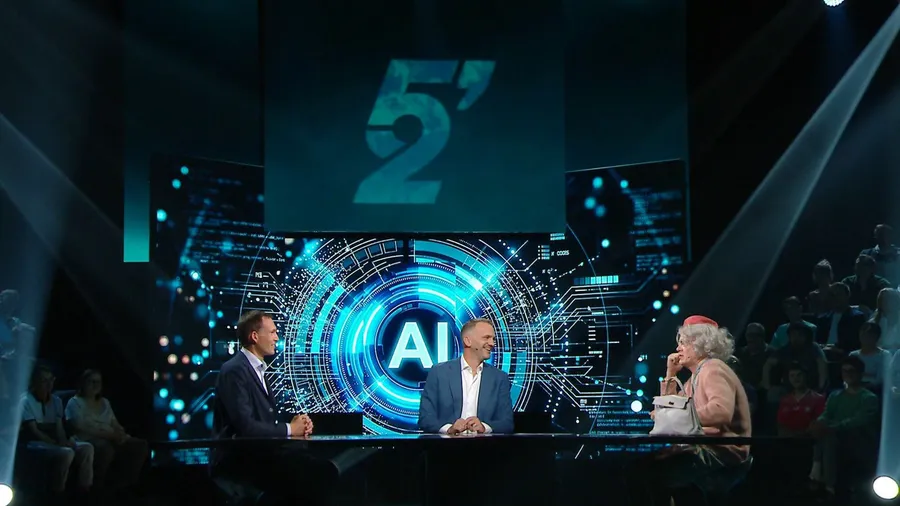
Vincent Kucholl and Vincent Veillon devote a special edition to artificial intelligence. Their guest is Charles-Edouard Bardyn, Vice-President and Chief Scientific Officer of AI Swiss.





Join AI Swiss
Membership supports the association’s free resources, events and training, which are open to everyone.
CHF 220.- a year
JoinOn request
For companies and institutions. Committee contacts: Frédéric Matthey, Corporate Relations Manager, and Cédric Chevrier, Partnerships Manager.
Contact usMembers and partners support the association without any say over the content of its resources, which remain free and accessible to everyone.
No. What matters is mastering communication with AI: saying what you want to achieve, giving the context, describing how you work and checking the result. These skills are human before they are technical: expressing yourself clearly and thinking critically.
The co-thinking guide introduces them step by step.
By turning every exchange with AI into an exercise in communication. Pupils learn to state their intention clearly, to give the relevant context, then to question and check each answer before using it. The AI suggests; the pupil refines, challenges and decides.
The AI Swiss white paper describes this approach for schools, and Rodin lets pupils practise it in class.
AI Swiss also trains teaching staff. For a session at your school, write to info@a-i.swiss.
By starting from the way it already works. A meeting becomes structured notes, the notes feed a plan, the plan guides the work, and each step happens in dialogue with AI.
With BASE, a free resource from AI Swiss, the team keeps this method in files that it can read back, correct and pass on. The team pays for its own access to an AI model.
An AI model can be confidently wrong, reproduce biases from its training data, and it does not check its own answers. Validation therefore stays with humans: reread, cross-check, decide.
For your data, choose a workspace where files stay on your device, and where you choose which model is used and what it can access.
The BASE page explains what happens to confidential data.
It will transform many tasks, and nobody can say today which ones will disappear. Some abilities remain on the human side: expressing intention, bringing first-hand context from the field, judging and validating. The most useful AI systems complement these abilities instead of imitating humans. Co-thinking prepares you for that role.
A Swiss non-profit association, founded in late 2022 in Neuchâtel. Its committee runs it. Stéphane Fallet chairs it. Charles-Edouard Bardyn, Vice-President and Chief Scientific Officer, leads its scientific projects. Members and partners support it without any say over the content of its resources, which remain free.
Official media partner of AI Swiss